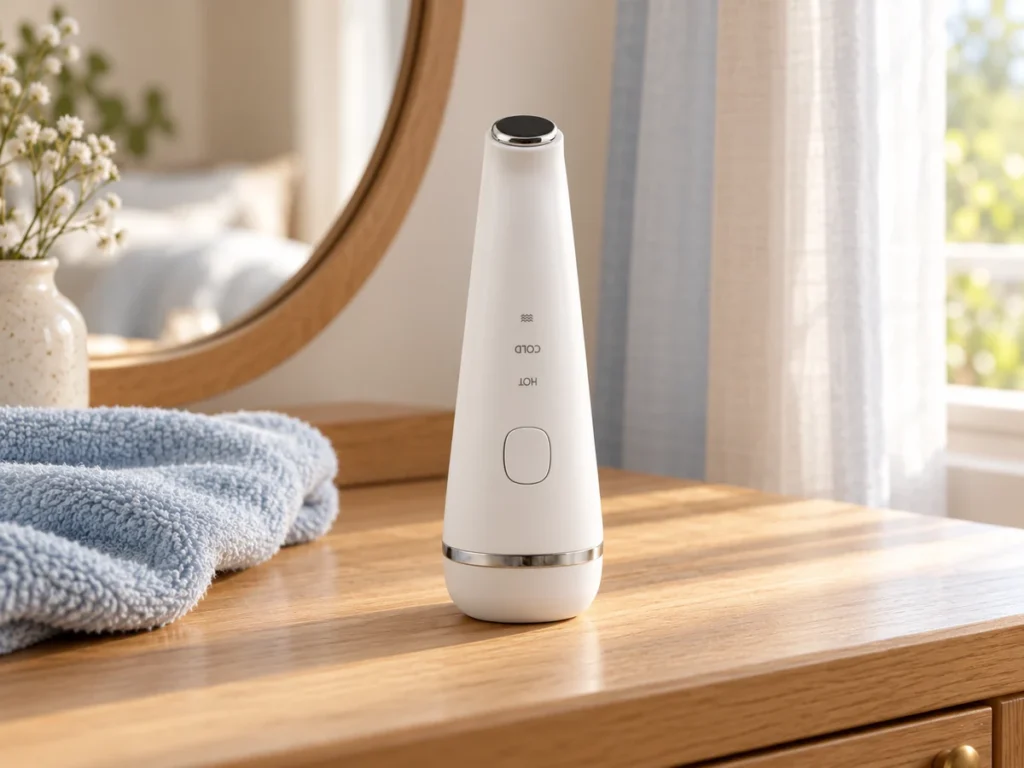
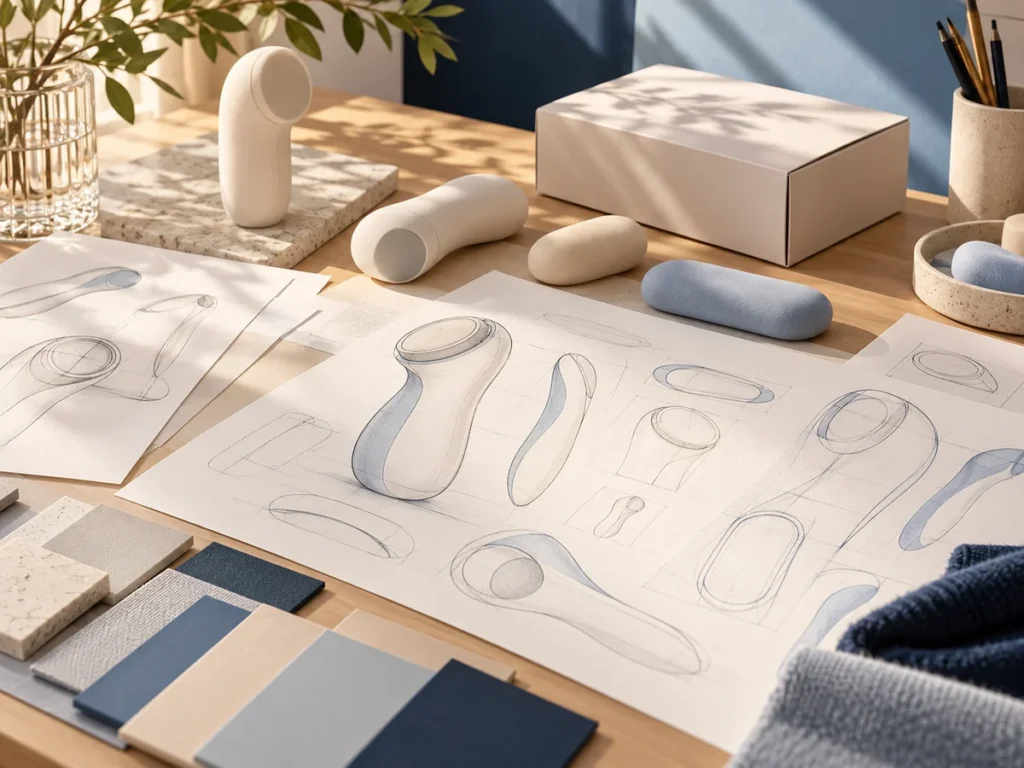
Turn beauty-device technology labels into specific supplier questions about functions, controls, evidence and the routine your customer will actually follow.
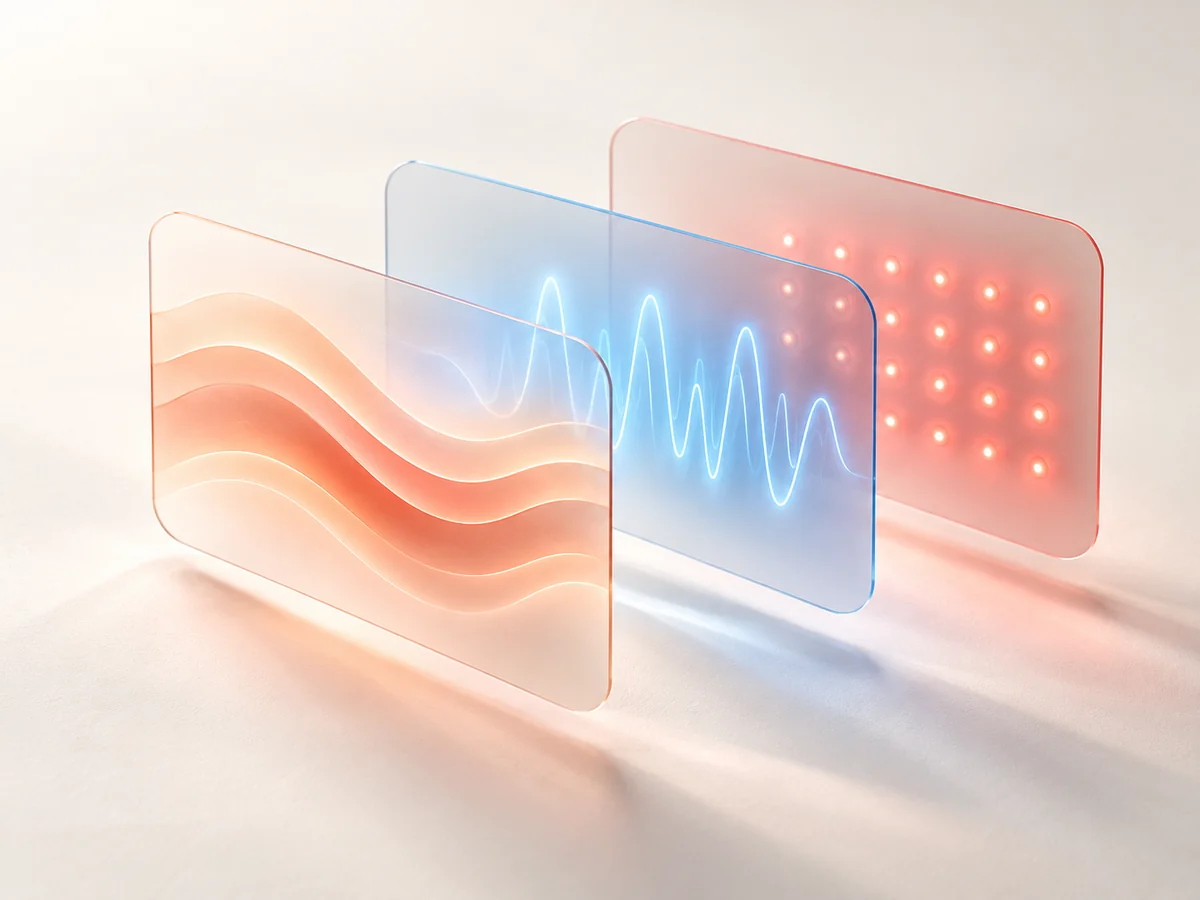
AI-generated conceptual illustration. The abstract patterns do not represent measured output or biological effects.
A long list of technologies can make a beauty device sound versatile while leaving the buyer unsure what the customer will actually do with it. RF, EMS, microcurrent, LED, vibration and heating describe different aspects of a product. For a brand planning an OEM project, the useful question is how each proposed function fits the routine, the controls and the evidence for the exact model.
Give the product one primary job
Write a short description of the intended experience without using a feature list. For example, a brand might want a compact device with a straightforward evening routine and an interface that can be explained in a short demonstration. That brief immediately raises useful questions about grip, mode selection, session completion and storage. It also makes unnecessary complexity easier to recognize.
Decide which feature is essential to the concept and which would only be useful if it does not complicate the product. Treat an additional mode as a design decision with a purpose, an interface requirement and an evaluation task. This gives engineering and purchasing the same definition of what the brand is trying to launch.
Translate technology names into an evidence request
| Label in the product brief | Question to put to engineering |
|---|---|
| RF | How is RF output specified, controlled and verified on this configuration? |
| EMS or microcurrent | What output description and operating conditions support the exact term used? |
| LED | Which light channels operate in each mode, and what measurements are available? |
| Heating or cooling | How is surface temperature controlled and evaluated during the intended use? |
| Vibration | What pattern, user control and functional checks define the proposed mode? |
Do not infer RF from a warm contact surface, or identify a device as microcurrent simply because it has metal electrodes. EMS and microcurrent should not be treated as interchangeable labels without the model’s technical definition. Ask the supplier to reconcile the terminology across its quotation, specification, sample, manual and packaging.
Evaluate the combined routine, not isolated feature demonstrations
A multifunction product may activate features together or in separate modes. Ask for a mode map showing what turns on, what the user can adjust, what the indicators mean and how the device stops. Review that map with the actual sample. If two modes look identical to the user, the manual or interface may need clarification even if both function as designed.
Create a simple scenario review: starting from storage, preparing the device as instructed, selecting the intended mode, recognizing normal operation, finishing and cleaning. For each step, note what the customer must know and what the product communicates. This is an evaluation framework for the brand team, not a substitute for technical testing or approved use instructions.
Budget for every feature you choose to explain and support
A function can affect more than the bill of materials. It may add control logic, user instructions, evaluation work, photography requirements and after-sales questions. Ask which changes are already supported by the platform and which need development. A feature that appears inexpensive at component level may create a larger project if it changes the housing, power arrangement or document scope.
One practical decision tool is a feature register with five fields: customer purpose, technical definition, user action, verification method and publication evidence. Leave a feature out of the launch specification if the team cannot explain why it is there or what would demonstrate that it has been implemented as agreed. Revisit it later with a better-defined requirement.
Keep the proposed customer benefit tied to the proposed device
A supplier’s general technology explanation cannot establish the results of every product using that technology. Build the marketing plan around evidence for the exact configuration and its intended use. Avoid borrowing clinical language, treatment claims or before-and-after promises from a different device category. A non-invasive home-use product brief also should not inherit claims from invasive professional equipment.
Ask for current documentation and qualified review appropriate to your target market before finalizing claims. During development, keep proposed wording marked as pending until the responsible reviewers have assessed it. That makes the handoff from product development to the content team much clearer.
Start the BINZIM conversation with a focused shortlist
Select one or two catalogue models that fit your intended routine, then list the functions you need to retain, remove or evaluate. Request the current specification for each complete model number, including any suffix. Compare the samples against the same brief before deciding whether an existing platform or deeper development is appropriate.
Review BINZIM OEM/ODM development options →
Related guide: Read the LED face mask evaluation guide.
Editorial background & further reading
Industry reading: Beauty Device Technology and Manufacturing FAQ — Ace-tec. This BINZIM guide uses an independently written structure, practical planning tools and illustrative examples; third-party product claims do not describe BINZIM products.
Reviewed October 24, 2026. Confirm current specifications, available documents and commercial terms for the exact model and target market before ordering.