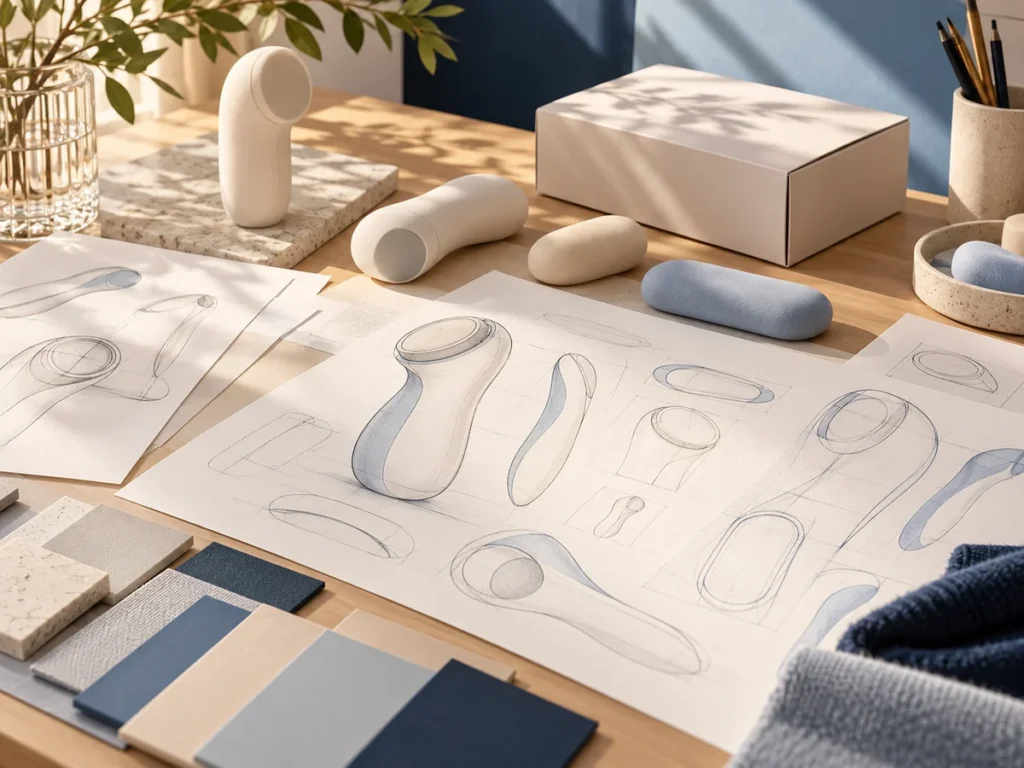
Understand the hot-and-cool facial device format, the details that shape everyday use, and the questions to resolve before a private-label sample order.
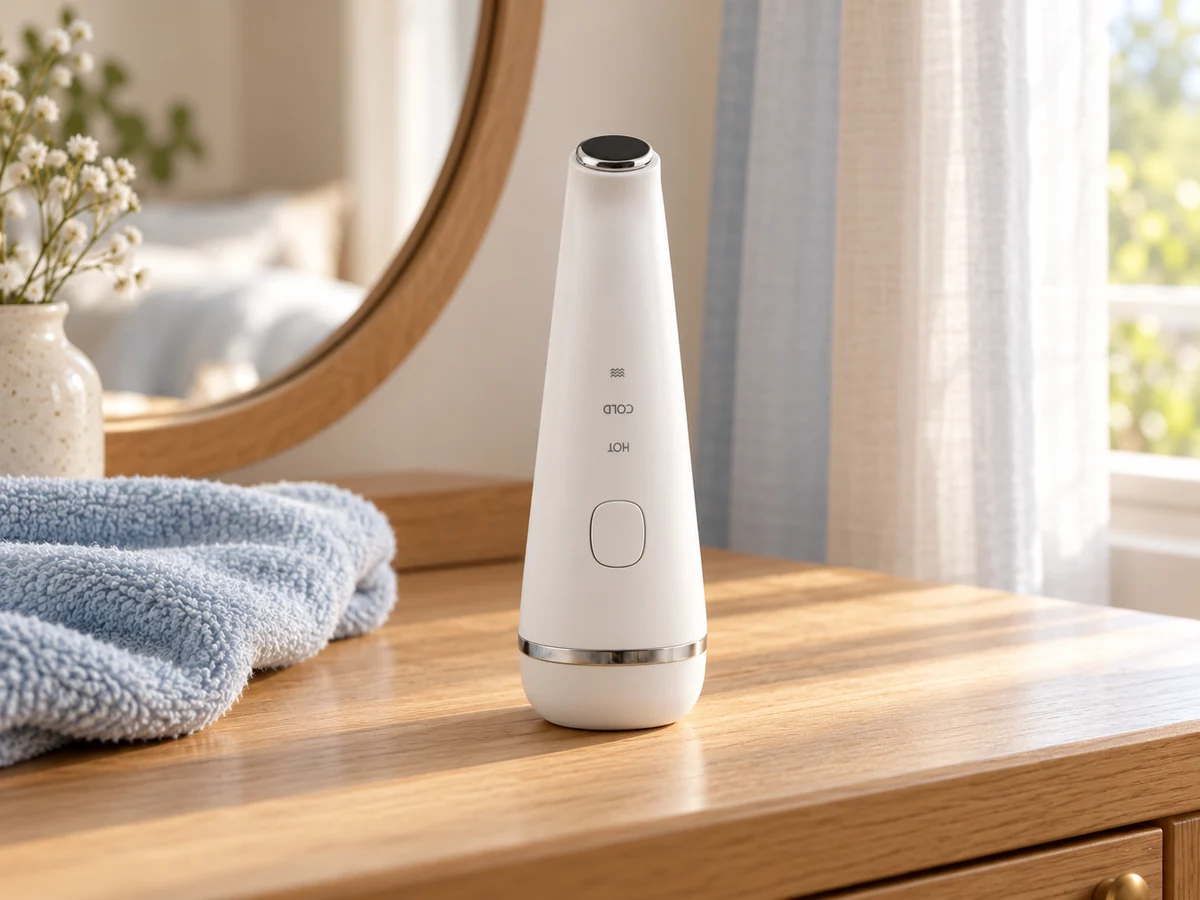
AI-generated home setting based on the company-supplied BINZIM BZ-0508 product reference.
What is a hot-and-cool facial device?
A hot-and-cool facial device brings warming and cooling modes into a handheld skincare format. For beauty brands, the appeal starts with a simple product idea: an everyday device whose main functions can be introduced without a long list of unfamiliar technology names. The actual experience depends on the contact head, controls and instructions of the selected model.
Begin by distinguishing the device category from the promises a brand may want to make about it. A warm or cool surface is a functional characteristic. A claim about changing skin structure or delivering a measurable cosmetic result needs its own supporting evidence. A product introduction should explain the proposed experience without allowing a familiar sensation to stand in for proof of a benefit.
Read the product as a sequence of user actions
Imagine the customer opening the box for the first time. Can they identify the contact surface, select the intended mode and recognize when operation has started? Can they distinguish the controls without repeatedly returning to the manual? These questions help a brand evaluate whether the device fits its audience and the support it can provide.
During sampling, review the complete sequence from storage to preparation, operation and cleaning. Use the supplier’s instructions for the exact model. Record anything that requires an extra explanation, such as an indicator that is difficult to interpret or an accessory that is not identified clearly. The result is a list of communication and design questions, not a new treatment protocol.
Ask what the temperature description actually means
A temperature printed on a sales sheet should come with context. Ask where it is measured, how long the mode takes to reach its operating condition, which environment was used and how the contact surface is controlled. A minimum reading taken under one condition is not a complete description of a customer’s session.
Ask the supplier which evaluation records identify the proposed hardware and how the relevant checks are performed. If two sample versions behave differently, record both revision numbers before comparing them. Avoid selecting a product simply because its catalogue advertises a more extreme temperature; the decision needs to account for the intended experience and the evidence available for that version.
Look at the head and handle together
The shape of the head affects where and how the device can be positioned, while the handle affects grip and visibility of the controls. Inspect these parts together. A compact head may be easy to photograph but still need a clearer demonstration of the approved handling method. A smooth housing should also be assessed for grip during the intended routine.
For a sample review, note the transitions between materials, the ease of following the cleaning instructions and the way the device is stored after use. Agree which observations are preferences and which become acceptance criteria. This keeps the brand’s aesthetic direction connected to a practical production specification.
Keep additional functions specific to the model
Some products in this category also describe LED, vibration or other functions. Do not assume that every hot-and-cool device includes the same combination. Ask for a mode map showing which functions operate together and which can be selected independently. Match the explanation to the actual sample and proposed instruction artwork.
The same discipline applies when writing an introduction for a private-label version. State the confirmed functions using consistent terms. Keep exact wavelengths, battery capacity, session timings and accessories tied to the approved specification instead of assembling a stronger-looking description from several historical documents.
Turn the introduction into a useful purchasing conversation
A focused inquiry should identify the target market, sales channel, selected model, first-order quantity and requested branding changes. Include the proposed box contents and manual languages. Then ask which parts of the configuration are already available and which need engineering review or another sample.
BINZIM’s BZ-0508 is a catalogue example of the handheld hot-and-cool format. A brand considering this model can start with its appearance and catalogue dimensions, then request the current configuration and sample information. Confirm the applicable documents and commercial terms for the intended market before preparing the final launch material.
Explore the catalogue model: BINZIM BZ-0508 Hot & Cool Facial Device.
Further reading
Hot and Cold Facial Massager — R1120 — Rhafine. Category reference reviewed October 24, 2026. Product configurations are model-specific.
Confirm current specifications, supplied accessories and available documentation for your project before ordering.