Evaluate an LED face mask as a complete user experience. Compare fit, operating modes, measured output and the evidence tied to the exact proposed configuration.
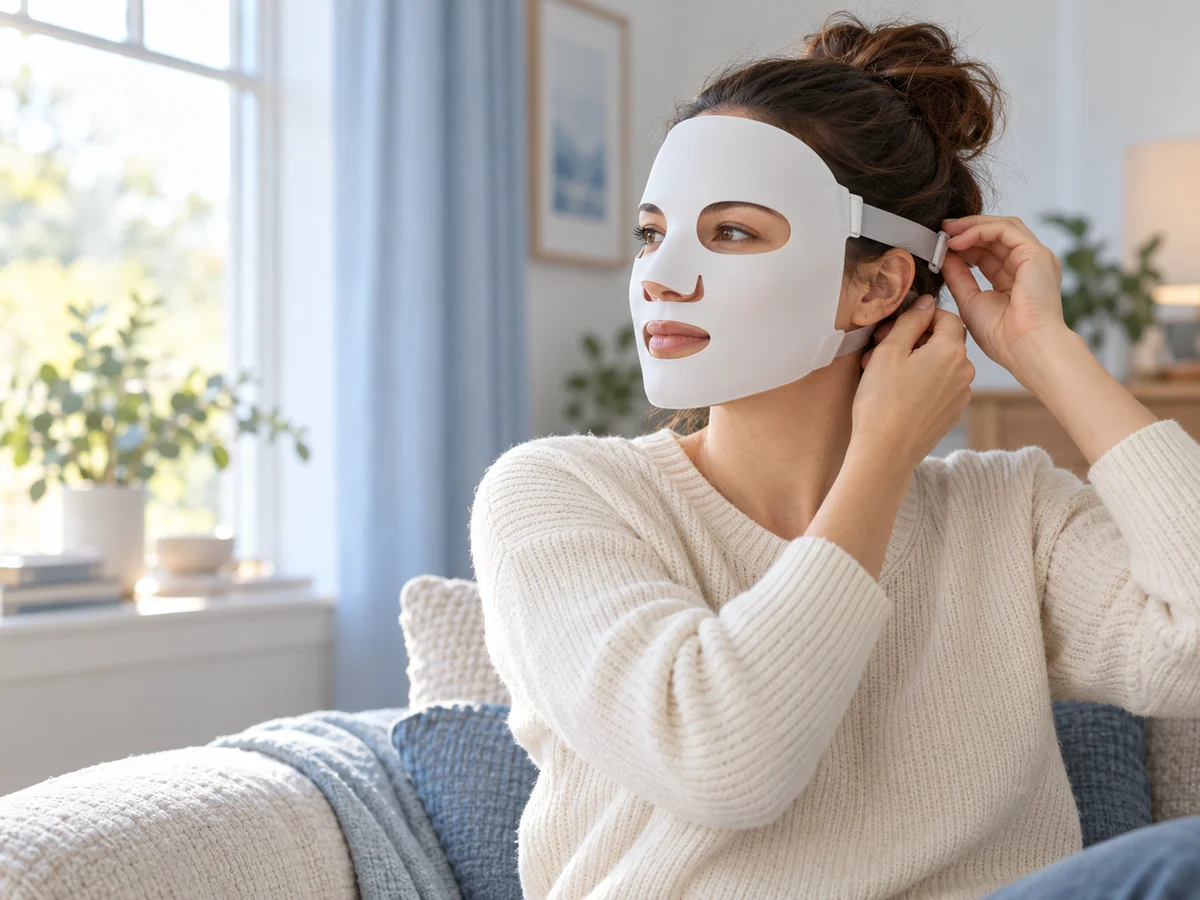
AI-generated fit-check illustration using a generic mask; not a BINZIM model or evidence of results.
An LED face mask can look convincing in a product rendering and still be awkward to position, difficult to clean or confusing to operate. For a private-label brand, those details become customer questions and support work. Evaluate the proposed mask as a complete routine, with technical data attached to the same configuration you handle during sampling.
Begin with the use setting
Describe where the customer is expected to use and store the mask. A product intended for a small home needs a different packaging and storage discussion from a gift set with several accessories. Consider whether the user must remain close to a power source, where the controller rests, and how the cable behaves when the user changes posture. These practical questions help narrow the sample shortlist before comparing decorative features.
Build a brief evaluation script for every sample. Include unboxing, identifying parts, fitting the strap, finding the controls, understanding the instructions and packing the product away. Observe how easily a reviewer completes each step without extra coaching. Use the approved instructions and the applicable evaluation procedures; do not invent operating settings for the exercise.
Review fit as a system of interacting parts
Mask shape, flexibility, strap placement, openings and controller weight interact. A soft material alone does not tell you whether a mask stays in place or whether the cable pulls on it. Record observations against the sample revision, including pressure points, strap adjustment and ease of removal. A small internal usability review helps identify design questions; it is not a clinical study or safety certification.
The eye-area design deserves specific discussion with the supplier. Ask how it is intended to be used and what protective measures and instructions belong to the exact model. A comfortable visual impression cannot substitute for the relevant safety assessment. Keep use guidance consistent across the device, manual, packaging and product listing.
Ask for an output description you can compare
Color names and the number of LEDs are a starting point for a conversation, not a complete performance specification. Ask what each operating mode activates, which output characteristics have been measured, and under what conditions. If irradiance is quoted, the measurement location, distance and method need to accompany the value. Avoid ranking samples by the largest isolated number.
For a combined mode, ask whether the data describes the combination or only one light channel tested separately. Keep model number, controller version, sample identification and report date together. When a supplier proposes a different configuration, request an explanation of what needs to be re-evaluated rather than carrying all previous assumptions forward.
| Review area | What your team should retain |
|---|---|
| Fit and handling | Notes linked to the sample revision and the instructions used. |
| Operating modes | A clear mode description consistent with the controller and manual. |
| Measured light output | Identified report or measurement record with stated conditions. |
| Packaging and care | An approved parts list, storage arrangement and cleaning instructions. |
Keep safety documentation separate from benefit claims
A report should be read for what it actually assesses. IEC 62471 addresses photobiological safety of lamps and lamp systems; a report within that scope does not, by itself, establish a cosmetic benefit. Review its model identification, tested configuration and conditions. The relevance of a standard and the documents needed for launch depend on the exact product and intended market.
Make a claim register for your proposed listing: the wording, the evidence supporting it, the product version and the person approving publication. This prevents an attractive phrase from another supplier’s catalogue from becoming a claim about your private-label mask. Keep technical feasibility, safety review and claim substantiation as distinct decisions in the project file.
Turn the sample review into a clear next step
At the end of sampling, group the findings into acceptable items, changes requiring another sample, and unresolved document questions. Assign an owner and closure date to each. Avoid approving production while a necessary change remains described only as “improve comfort” or “make light stronger.” Define what will be checked on the next version and how it will be accepted.
- Which exact mask, controller and accessories are included?
- Can the supplied instructions be followed without additional explanation?
- Do the measured-output records identify the proposed configuration?
- What evidence supports each intended sales claim?
- Which requested changes require a new evaluation before production?
For a BINZIM LED project, begin with the available catalogue model and request current specifications, sample arrangements and model-specific documents. Confirm your market, intended claims and customization scope before treating any catalogue description as a finished launch specification.
Explore BINZIM’s device catalogue →
Related guide: Connect sample findings to production acceptance.
Editorial background & further reading
Industry reading: LED Face Mask OEM Sourcing Guide: How to Choose the Right Manufacturer for Your Brand — Wakelife. This BINZIM guide uses an independently written structure, practical planning tools and illustrative examples; third-party product claims do not describe BINZIM products.
Standard scope reference: IEC 62471:2006 — Photobiological safety of lamps and lamp systems.
Reviewed October 24, 2026. Confirm current specifications, available documents and commercial terms for the exact model and target market before ordering.